
fantasy land
on oxford

The other day, I had a dream about Oxford. In this dream, I was sitting in the common room of a college that wasn’t mine with someone who, in real life, knows pretty much everything about Oxford, Cambridge, and the weird systems with which they operate. So, as I was talking to him in the dream, it came to me as no surprise that he was dressed for an Event. The Event was black tie – I could tell by what he was wearing, as I know the usual outfit he sports when he takes me to black tie events – but at any rate, in the dream, I couldn’t recall him telling me about him going to a formal. “It’s Treasury, of course,” he said to me.
“Treasury?” I said. “What’s that?”
In real life, he would have explained it to me, then probably apologised for not telling me sooner. Or, more likely, he would have invited me the moment he knew tickets were on sale. However, this was a dream, so he was extremely affronted and condescending. “What’s Treasury?” he said mockingly. “What do you mean, ‘what’s Treasury’? Do you mean you haven’t even gotten a ticket?”
I, of course, was dressed in normal clothes. As he berated me, other people came into the common room, undergrads mostly, all dressed to the nines in black tie attire. All of them were talking about this mysterious event called Treasury, which was apparently not simply a one-college event but occurred in some form or another, around the same time, at every single college at Oxford. Everyone was going except for me, and everyone’s reactions when I told them I wasn’t going ranged from incredulous and baffled to offended and condescending.
This dream encapsulates exactly the kind of nonsense I feel as though I deal with on a daily basis as a, to put it bluntly, pleb student at Oxford. In my first week at Oxford, someone asked in my college’s group chat where the pidges were, and the response was, “In the plodge.” Like a good, normal citizen, I laughed for a minute, screenshotted the text, then sent it everywhere (blocking out names and numbers, of course). Pidges in the plodge? What is this, Narnia? Do you people hear how you sound?

Here are some other, perfectly normal things that happen at various colleges in Oxford that, if you say them to a normal person, they’ll (rightfully) say, “Excuse me, but what the hell?”
Lincoln College has an imp. The original imp lives in the beer cellar. If I showed you a photo, you’d be cursed for the next ten years.
Corpus Christi College has a cannibal tortoise who has been disqualified from the annual Tortoise Fair race many years for attacking the competition. The Tortoise Fair also includes a human tortoise race.
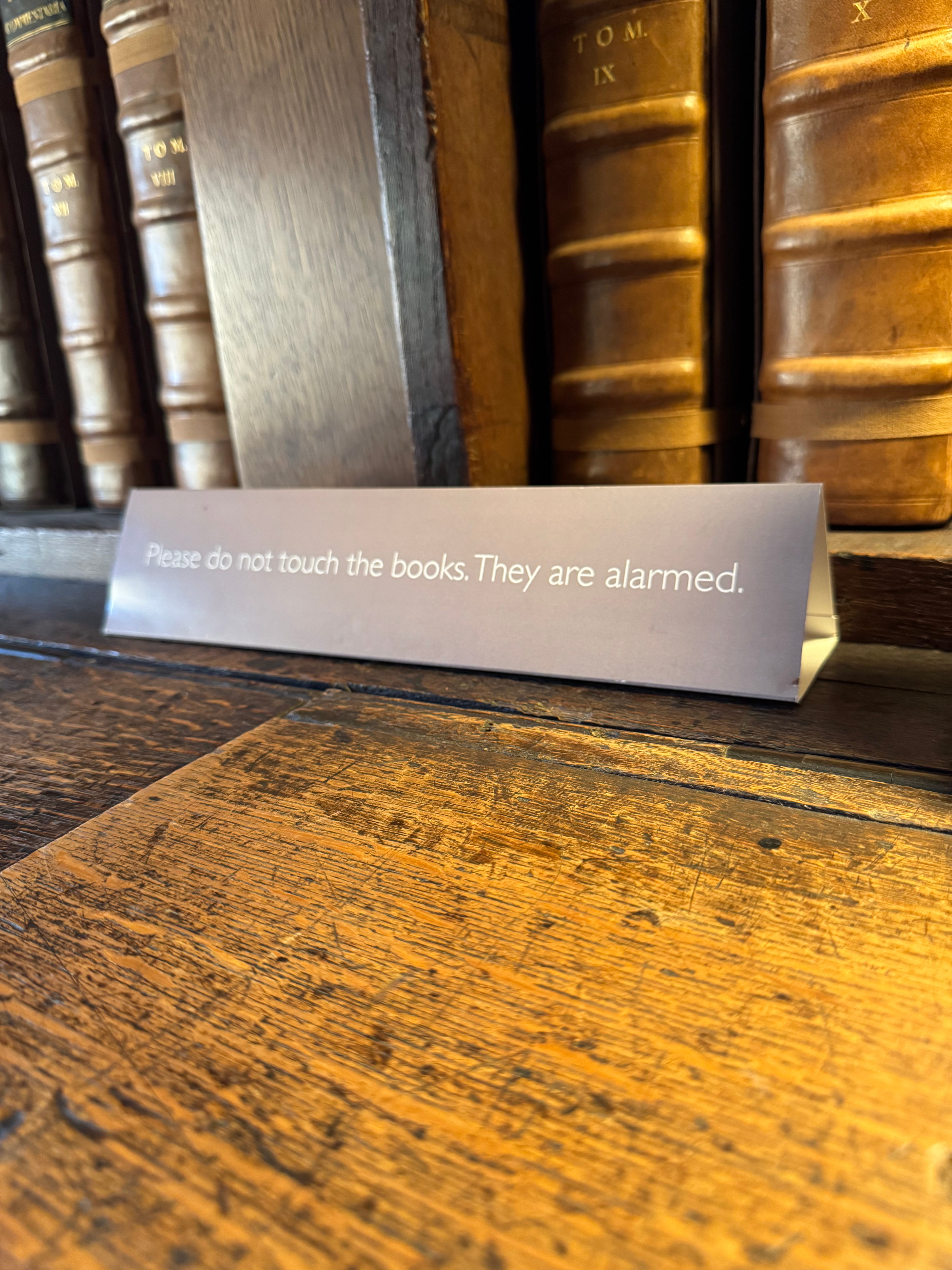
If you take a book from the shelves at Duke Humfrey’s library, alarms will go off and you will probably be escorted out of the building.
New College is responsible for maintaining the city wall. This has been the case since New was established in the fourteenth century, making New College one of the oldest colleges at the university. Obviously.
Kellogg College is named after the cereal. (I was, as an aside, told this several times and thought that each time, the person who told me was pulling my leg. It was only when someone I knew wouldn’t lie to me told me this that I actually believed it.)
Just when I think I’m getting the hang of the weird vocabulary and lore that only exists at Oxford, someone will say something like “gaudy guests” and I will feel as though I’m back to square one. There’s always, it seems, a new word that I know the defintion of but don’t know the Oxford definition of (no, I don’t mean the Oxford English dictionary), and its mere existence in a sentence will make me feel as though I am both too brown and too ordinary to ever understand what’s going on here.
At the same time, I have found that I am starting to understand some of what goes on here, because my vocabulary is changing. When I say MCR, my first association is no longer with the band but with a graduate common room in an Oxford college. I sometimes bemoan having to attend an event that requires a gown, and I know that what I mean is not a dressing gown nor is it a proper fancy robe, but instead a strange Oxford version that has no sleeves, goes down to my thighs, and has two weird strips of black fabric that flow behind me when I walk. But if I say this to people outside of Oxford, they will ask me what the hell I’m talking about.
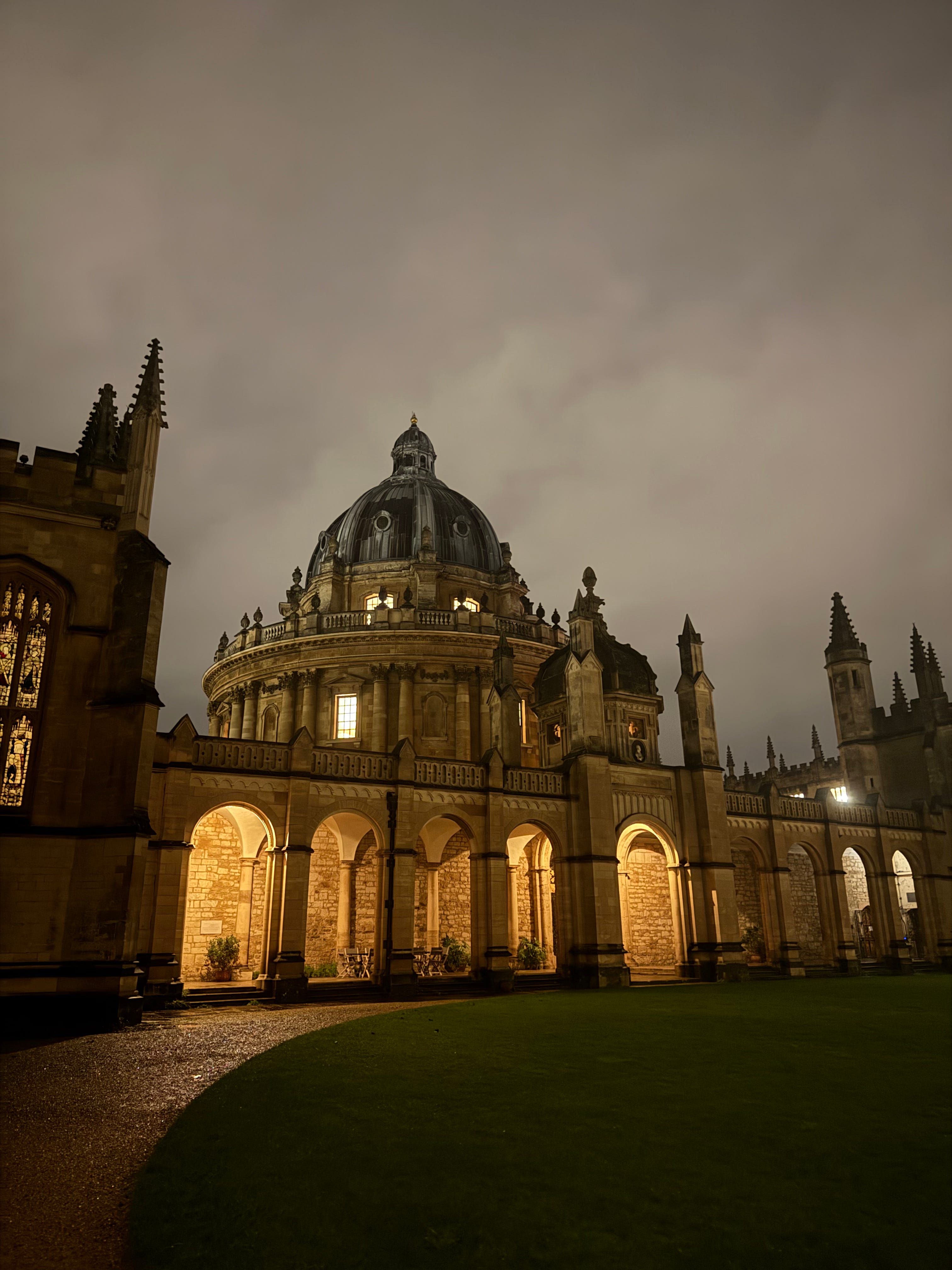
One of my friends who didn’t go to Oxford, but has two friends that did, said once that speaking to them sometimes means having to decode riddles. They speak with words that have common definitions but what they say makes no sense when they use those words in a sentence. Often, defining these words within the context of Oxford takes far too long, and by the time they’ve explained the system, the whole point of the story is lost and it’s no longer fun for anyone involved.
Some people call it elitism. I suppose there’s a valid point there. The system itself is such that if you are in, you will eventually understand the words; if you are out, you will never be included. And yes, it’s a bit ridiculous. Why say gaudy when you just mean alumni? Why say plodge when you just mean the porters’ lodge? There are perfectly normal ways to say these things, yet continuously, people at Oxford choose to use the Oxford-specific language.
I’m sure there’s a lot more that someone not at Oxford would say about the elitism and purposeful exclusion within the language used at Oxford. But speaking as someone who is at Oxford, and who is starting to use these terms, I have to give the weakest defence for them: because it’s fun. It’s fun to say I’m going to a formal. It’s fun to say I’m getting my outfit ready for the ball. It’s fun to say that I’m going to have a cup of tea in the MCR.
When I first came to Oxford and was getting a crash course in Oxford language, I thought it sounded all a bit like something out of a fantasy book. This isn’t real life; this is fantasy land. No one utters sentences like this outside in the real world. All of us were willingly entering a strange, parallel dimension that calls itself the University of Oxford, and because we entered it, we had to learn the language of its people. We all had to, in some way or another, assimilate into our new world until such a time when the portal said we’d spend enough time in Narnia and we had to return to the real world to share what we’d learned here.
It is, in a way, like immigrating to a new place. There are things you get used to, which become part of your daily life, and when you return home for holidays or your parents come to visit you, you find yourself explaining things that you also didn’t understand when you first arrived. When I first arrived in Oxford, I found it quite sad how half of the city was simply shut to inhabitants who weren’t part of the university: colleges, libraries, archives, and all sorts of resources are shut to the public. Yet when the new humanities centre opened – which I oppose for pretty much every reason imaginable, and we do not have time to get into it here – and it was made available to the public, I grumbled and said, “But why? This isn’t fair! Those stupid science people don’t have to share their buildings!”
I do believe, however, in demystifying Oxford. It’s a fantasy land, but it’s one that has whimsy and joy. You can be grumpy about it, of course, and grumble and curse and complain about how ridiculous everything is at this place and why don’t they just do it normally because it would be better for everyone involved and why do we stick to all these stupid medieval traditions anyways? The other option is much more fun, though. You can embrace it. You don’t have to change your entire personality, of course, and you can accept that sometimes things are a bit ridiculous for no reason. But you can add in some whimsy. We all know we sound a bit ridiculous, but why does that have to stop us from enjoying it? Why isolate yourself and grumble about everything when you can go outside, speak to people, and enjoy life?
At the end of the day, you can’t be grumpy when you say words like plodge.
(I never did find out what the mysterious Treasury event was.)